Long before a child’s first word, “silent” skills are built, the most critical being imitation. Speech development begins not with talking, but with the body and hands. Mimicking a wave or pointing at an object lays the essential groundwork for communication. Understanding how a child copies the world allows us to better support them in finding their voice.
1. The “Mirroring” Skill: How Imitation Works
Imitation is how humans learn almost everything. In the world of speech therapy, we look at a specific “ladder” of imitation. If a child isn’t talking yet, we often go “back to basics” to see which rung of the ladder needs a little extra practice:
- Big Movements (Gross Motor): This is the very first step. Can your child copy big actions? Think of things like clapping hands, waving, or putting their hands on their head during “Head, Shoulders, Knees, and Toes.”
- Small Movements (Fine & Oral-Motor): Once they master the big stuff, they move to smaller details—like pointing, sticking out their tongue, or blowing a kiss.
- Playful Sounds (Environmental): This bridges the gap to real words. It is often much easier for a child to imitate a “Vroom!” for a car or a “Moo” for a cow than it is to say the actual word.
- Words (Speech): This is the final step, where the child attempts to copy the specific sounds (phonemes) that make up spoken language.
2. Gestures: The Bridge to Speaking
Gestures are a form of symbolic communication. When your child points at a cookie, they are using a physical symbol to represent a complex thought: “I want that!” Research shows that gestures are a “crystal ball” for language development. In fact, the number of gestures a child uses at 14 months is a strong predictor of how many words they will have at 42 months.
Key types of gestures to watch for:
- The “Look at That” (Deictic): These emerge around 10–12 months. When your child points at something to show you, they are establishing joint attention—making sure you are both sharing the same experience.
- The “Acting it Out” (Representational): These carry a specific meaning on their own—like holding a hand to their ear to mean “phone” or flapping their arms to signify “bird.”
- The “Big Leap” (Supplementary): This is a huge milestone! This is when a child combines a gesture with a word (e.g., pointing to a chair and saying “Sit”). This usually happens right before they start using two-word phrases.
Why This Matters
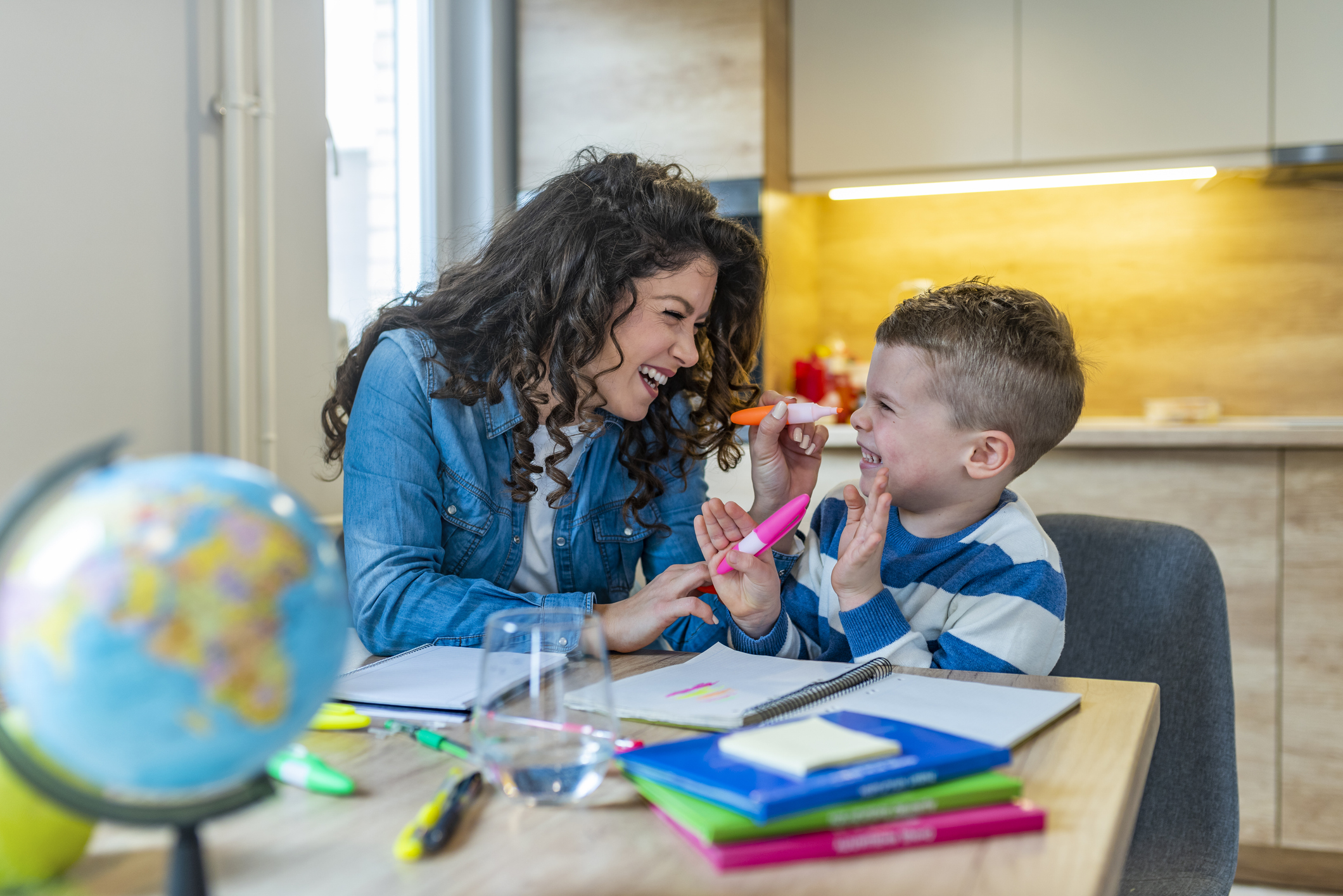
Imitation is crucial because it teaches Social Reciprocity—the back-and-forth of human connection—before speech begins. Every child’s communication starts with simple, shared moments of imitation and gesturing. Celebrate every wave, point, and sound, as this builds the foundation for their first words.
Parent Tip: Next time you’re playing, try imitating your child first. If they bang on a drum, you bang on a drum. Often, starting the “mirroring” game yourself is the best way to encourage them to copy you back!
If your child struggles with imitation or gestures, early identification and support are key. You don’t have to navigate this alone.
Click here to learn more about Word Play and our speech and language therapy offerings.